Lessons from Literature: A Journey Beyond the Classroom

“The Subject That Taught Me to Listen Between Words”

school days
School_Life_Lessons

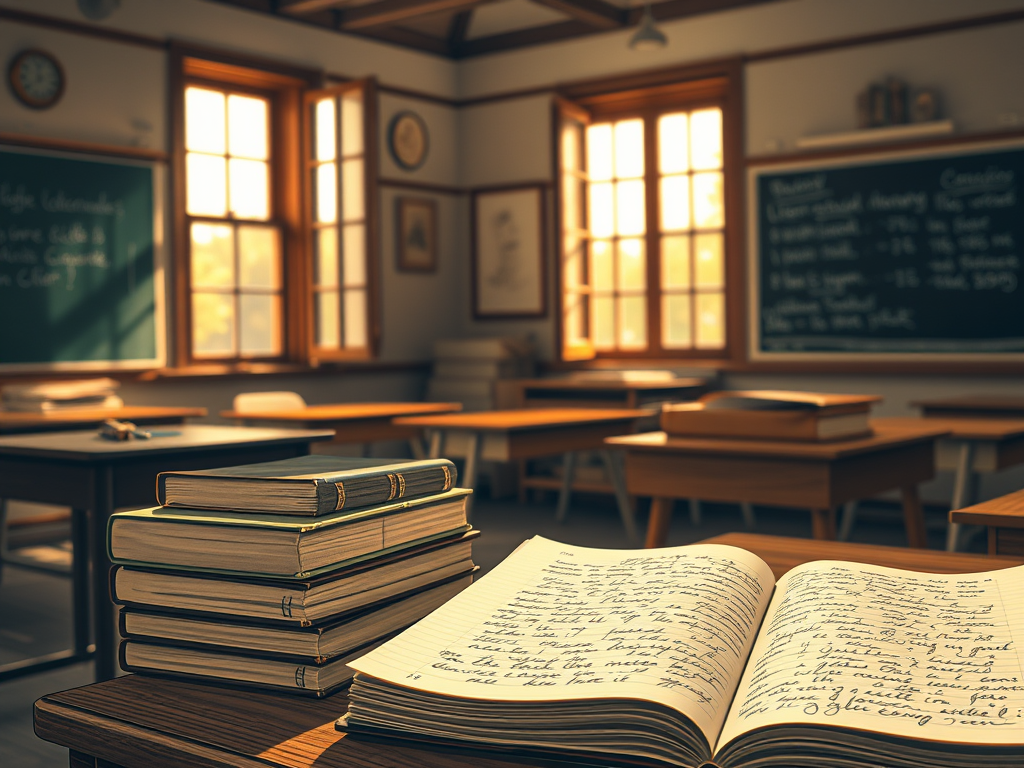
There’s a certain smell that lingers in memory—the chalk dust, wooden desks, the faint hum of ceiling fans that seemed slower during exams. When I think of my school days, I don’t remember the marks or the uniforms as much as I remember that feeling—the sudden spark when a subject stopped being “taught” and started being felt.

For me, that subject was English Literature.

It wasn’t love at first sight. In the beginning, it felt like another period to survive between math and physics. But something shifted the day our teacher read aloud a short story—no fancy PowerPoint, no grammar drill, just her voice breaking slightly at a line that carried more weight than it should’ve. That day, I realized that stories were not just about people who never existed. They were about us, disguised as others.

Soon, the classroom became a doorway. Every lesson opened into another world—sometimes a Victorian street, sometimes an Indian monsoon, sometimes a lonely desk by a window where someone was quietly falling in or out of love.

I began to notice how literature made silence audible. A single metaphor could reveal what hundreds of sentences couldn’t. Words became emotional fingerprints—each one leaving a trace of its writer’s pulse.

That’s when I started writing too. Not for grades or competitions, but for clarity. To untangle what I couldn’t say aloud. My notebook became a mirror, and slowly, writing turned into a kind of meditation.

Years later, I’d realize how that habit carried forward into everything else—my work, my teaching, even the way I listen to people. Urban Wellbeing Tips was born from that same seed—the belief that words can heal, that reflection itself can be a form of wellbeing.

But let’s be honest. School wasn’t all poetry and peace. There were the usual clashes—cramming for exams, rushing assignments, the endless question: “Will this come in the paper?” Even then, English somehow escaped that trap. It was the only subject where understanding mattered more than remembering.

And maybe that’s why it stuck. Because life, too, doesn’t test memory—it tests understanding.

In the margins of textbooks, I used to scribble phrases that made me pause—“The road less traveled,” “Out, out—brief candle!” “To thine own self be true.” They became small philosophies before I even knew what the word “philosophy” meant. Later, I’d come across thinkers like Jiddu Krishnamurti, who said that true education is about understanding oneself—not just learning how to earn. That echoed deeply. (You can read more on Krishnamurti’s educational philosophy here.)

Today, when I teach or write, I still chase that same energy—that moment when a learner stops reciting and starts connecting. It’s like watching a window open in someone’s mind. The room stays the same, but the air changes.

I’ve also come to realize how our favorite subjects often reveal who we already are beneath the surface. For some, it’s the structure and logic of mathematics—a quiet love for order. For others, it’s science—the wonder of seeing how everything connects. For me, it was always language—the pulse beneath thought, the architecture of feeling.

Looking back, that subject didn’t just teach me English. It taught me empathy, patience, and the art of slowing down to notice.

That’s a rare thing now. In a time when scrolling has replaced sitting still, literature still demands we linger. It asks for our attention, and in return, gives us presence.

If you’ve ever sat with a line that made your chest tighten or eyes sting—congratulations, you’ve met the real teacher. The one who doesn’t grade you, but grows you.

Even now, when I read or write for Urban Wellbeing Tips, I sense that same classroom hush. The one that held both curiosity and confusion. And maybe that’s the secret—that learning never really ends, it just changes form.

Sometimes I wonder what younger me would think of all this—of turning that old love for literature into a bridge between wellbeing, reflection, and storytelling. He’d probably smile and ask if I still underline my favorite lines. (I do.)

In the end, our favorite subjects don’t stay in notebooks. They seep into how we see, speak, and listen. They become the invisible syllabus of adulthood.

And maybe that’s the real exam—how well we keep learning from the things that once made us feel alive.

After all, education wasn’t supposed to end at graduation. It was supposed to begin there.

If there’s one takeaway from all this, it’s that every subject—when loved enough—turns into philosophy. And mine, hidden in poems and paragraphs, was simply this: understanding is the highest form of learning.

Perhaps that’s why I still read slowly. Why I still pause at a line and whisper, “Yes, that’s it.”

Because somewhere, a teacher once made literature feel less like a subject and more like breathing.
A gentle note for your inbox 🌿

Thoughtful reflections on emotional balance, quiet strength, and mindful living.

One calm email now and then. No noise. No pressure.

No spam. Only mindful words you can unsubscribe from anytime. Privacy Policy


Discover more from Urban Wellbeing Tips — Mindfulness, Mental Health & Gentle Reflections for Modern Life

Subscribe to get the latest posts sent to your email.

wellness reflection for stress relief and inner peace

Thank You For The Read. Get your FREE Sunday Reflections Card here.


Comments

16 responses to “Lessons from Literature: A Journey Beyond the Classroom”

  1. Yes to all of this! You have captured the magic.

    1. Thank you so much Lori. Your kind Words really touched my heart. I will always be waiting for your takeaways from my writings.
      ❤️🌹

  2. Wow, Rohitash! 🌿
    Yeh piece sirf school memories nahi jagata, balki un lamhon ko bhi yaad dila deta hai jab padhai mehsoos hoti thi, sirf seekhi nahi jaati. “Understanding is the highest form of learning” — yeh line seedha dil ko lagti hai. English Literature ke zariye jo empathy aur awareness aapne describe ki hai, woh truly inspiring hai.
    Thank you for reminding us that listening — even between words — is an art worth keeping alive. 💫

    1. Mahananda, apke ye shabd pad kar bhot acha laga . Esa laga ki Koi to hea jo mere lekh se apne “best” moments ko yaad karta hea. Mera likhna safal ho gya kyuki mere lekh apko kuch ache pal mehsoos kara sake. Ji ha Life mea awareness bhot zaroori hea , bina iske har -taraf ignorance fela hea. When we understand the essence of grammer then we fall in Love With it .❤️🧡

  3. For me it was freshman English in college. We spent the entire semester studying one poem: the cadence, the choice of words, the meaning. It was fascinating.

    1. That sounds beautiful — diving deep into a single poem like that must’ve felt like peeling back layers of thought and emotion. It’s amazing how much life can be found between just a few lines of verse.

      1. That’s just how it was, and from that experience I was able to use the skills I learned with other works of literature.

      2. Ok that sounds Great Jen.👍👍

  4. This was such a beautiful and soul-soothing read.
    Your words carried me right back to those chalk-dusted classrooms where learning felt alive — not just memorized. The way you described that moment of connection with literature, when stories stopped being stories and started reflecting us, was deeply moving.
    I love how you tied the essence of learning to understanding rather than remembering — that’s such a profound truth, and one that today’s fast-paced world often forgets. Your reflection on how literature becomes a quiet guide to empathy and self-awareness resonated deeply.
    The line — “education wasn’t supposed to end at graduation. It was supposed to begin there” — is pure brilliance. It’s something every learner, teacher, and writer needs to hear.
    Thank you for sharing this heartfelt journey through words, memory, and meaning. It reminds me why stories — and reflections like yours — continue to heal and inspire.

    1. That’s such a heart-touching reflection, thank you.
      It truly means a lot to know my words found their way to someone who feels learning the same way — alive, not mechanical. You captured the spirit of what I hoped to convey, almost as if you were right there in those chalk-dusted rooms with me.

      Grateful that these thoughts could travel this far and still meet a kindred soul who understands the quiet joy behind every word. Your response feels like a continuation of the story itself.

    1. Thank you for your visit and kind words.

  5. […] Lessons from Literature: A Journey Beyond the Classroom […]

  6. Wonderful insights! You capture the joy of learning not only for its own sake, but also for those powerful, silent, moments of “Yes! That’s it!”
    Some of my favorite lines:
    –“If there’s one takeaway from all this, it’s that every subject—when loved enough—turns into philosophy.”
    –“Perhaps that’s why I still read slowly.”

    1. Mike, thank you truly for reading so attentively.

      Your words tell me you did not just pass through the piece, you stayed with it. Those quiet “Yes thats it” moments you mentioned are exactly why I write and why learning never really leaves us. When a subject is loved deeply, it stops being information and starts becoming a way of seeing the world. You caught that beautifully.

      I smiled when you picked Perhaps thats why I still read slowly. Slow reading feels like respect to ideas and to oneself. It means we are allowing thoughts to settle rather than rushing past them.

      I am grateful for readers like you who notice the silences between the lines. I hope you keep walking these pages with me. Your reflections add warmth to the journey.

      Happy New year 💐🎄🎁

    2. Hi Mike
      I’ve just started a new Sunday Letters series today. It’s a quiet space where I pick readers’ comments and reply to them in my own reflective way — like letters, not replies.
      Sharing the first episode here in case it resonates with you:
      https://urbanwellbeingtips.com/2026/01/04/sunday-letters-ep-1-when-the-90s-felt-closer/
      Read it whenever you find a calm moment. I’d love to know how it feels to you.
      Warmly,
      Rohitash

Please Leave a Reply