
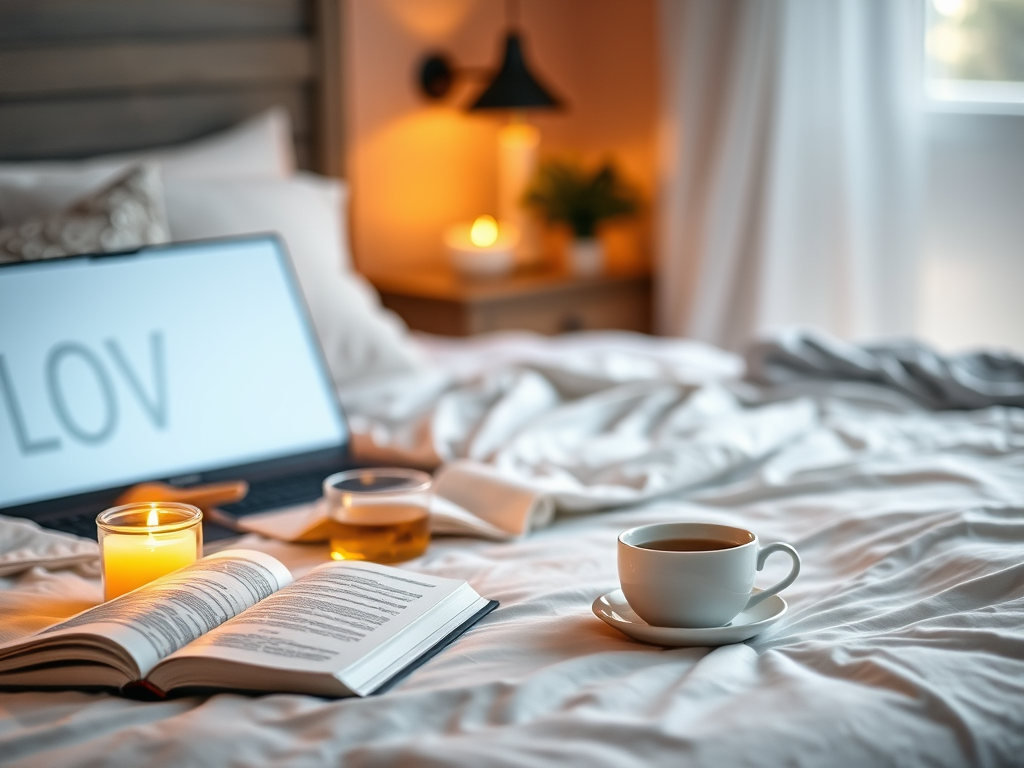

In a small apartment in London, a blue light flickers against a cold windowpane. Three thousand miles away, in a New York loft, the same spectral glow illuminates a tired face. Across the globe, from Tokyo to the quiet hills of Uttrakhand, humanity is united by a single, silent addiction: the glow of the rectangle. We are the first generation to take the entire world to bed with us, and we are paying for it with our souls.
I have felt it too. That magnetic pull. You tell yourself, “Just one more reel,” or “Let me check the news.” But as the clock ticks toward midnight, your brain isn’t resting; it’s vibrating. It is hard to leave what you have attached to yourself—and today, we have attached our identities to our devices. We don’t just use phones; we wear them like invisible digital prosthetics.
But what if I told you that the exhaustion you feel isn’t from your workload? It’s from a “corrupted landing.” Your brain is a Boeing 747 trying to land on a 50-foot runway because you refused to lower the landing gear until the very last second. This is the science of why your “quiet scrolling” is actually a loud alarm for your nervous system.
The Biology of the Blue Light Thief
Deep inside your brain sits the Suprachiasmatic Nucleus (SCN). Think of it as your internal conductor. Its only job is to watch the horizon for the sun. When the sun goes down, the SCN signals for the release of melatonin—the hormone of darkness.
However, research shows that blue light from screens can reduce melatonin production by up to 50%, making it exponentially harder to fall into restorative sleep. According to Harvard Health, even “quiet scrolling” delays the natural sleep-wake cycle by tricking the SCN into thinking it is forever noon. You aren’t just reading a tweet; you are telling your brain that the sun has refused to set.
My 20-Minute Digital Detox Ritual (With Exact Timing)
I realized that willpower is a finite resource. If my phone is next to me, I will touch it. To heal, I had to create a mechanical ritual. I stopped fighting my impulses and started outsmarting them. Here is the exact schedule I use to reclaim my nights:
8:45 PM — The Sensory Dim: I dim all lights in my bedroom. I use a small, warm-toned reading lamp. To make this transition easier, I started using this minimalist analog companion which helps anchor my focus without the blue-light spike.
8:50 PM — The Internal Rinse: I drink one glass of warm water or chamomile tea. This signals to the digestive system that the day’s “input” phase is over.
Why Journaling is the Ultimate “Brain Dump”
When you stop scrolling, the thoughts you were suppressing finally have room to speak. This is often why people find silence scary—it’s loud. Instead of running back to the screen, I use a technique called Cortisol-Journaling. By writing down the three things that “pestered” me during the day, I move the stress from my amygdala onto the paper.
If journaling is part of your wind-down, read this deep dive: How Journaling Lowers Cortisol — My Daily 5-Minute Method. It’s the perfect companion to this detox.
From “Active” to “Passive” Consumption
Not all technology is the enemy, but active technology is. Scrolling is active; it requires micro-decisions. Reading a physical book or an e-ink device is passive. One drains the battery of your focus; the other recharges it. The Mayo Clinic confirms that cognitive stimulation—the “loop” of new information—is actually more damaging to sleep than the light itself. It keeps the brain in a state of high-alert ‘readiness’ when it should be in ‘release.’
When the screen goes silent, your inner voice finally gets room to speak. It’s not just about sleep; it’s about regaining the 30 minutes of your life that belong to you, not to an algorithm in Silicon Valley.
Global Community FAQs
What part of your night feels the noisiest right now? Is it the notifications, or the thoughts they leave behind? Tomorrow morning, you could wake up feeling like the world is manageable again. It all starts tonight, at 8:40 PM.


Digital Detox_Before_Bed


Please Leave a Reply