
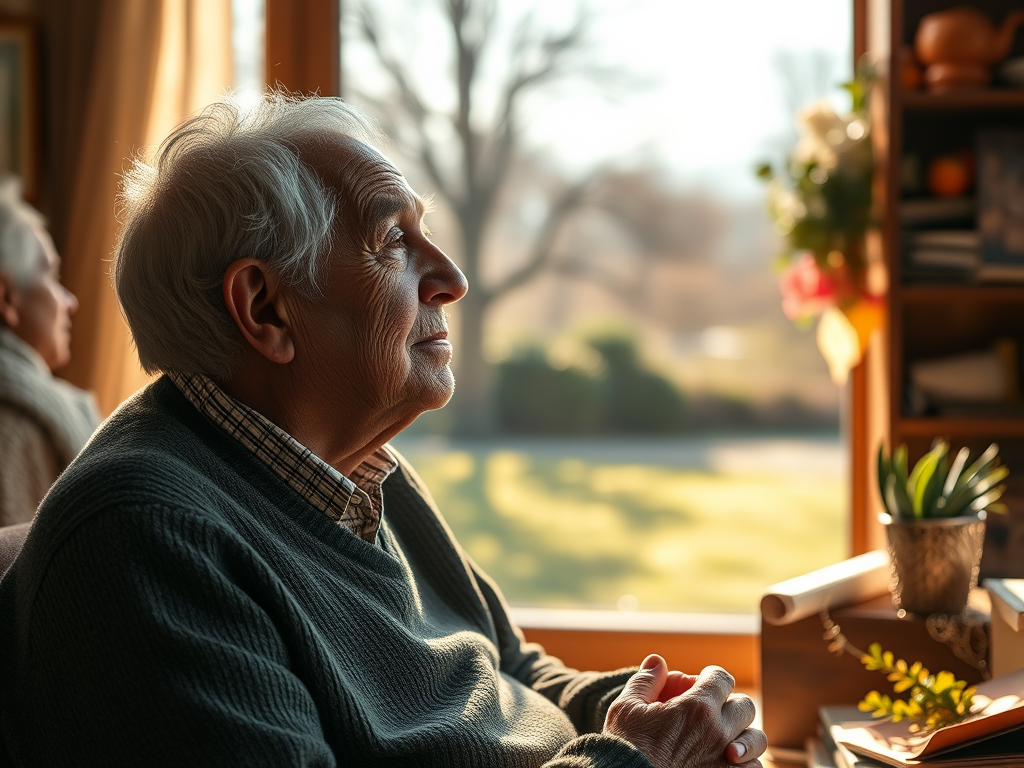

I used to think I wanted to live forever.
Not in a sci-fi way. Just… more time. More sunrises. More chances to fix my mistakes. More years to finally become the person I keep promising myself I’ll be.
Then last Tuesday, I watched my neighbor—84 years old—struggle to remember his daughter’s name.
And I realized: we’re asking the wrong question about longevity and emotional health.
It’s not “How long do you want to live?”
It’s “What kind of long are we even talking about?”
Because here’s the thing nobody puts on those inspirational longevity Instagram posts: extra years aren’t bonus rounds. They’re blank pages. And blank pages? They can fill with anything.
Even the stuff we’re not ready for—like the fear of living too long without purpose or the anxiety of outliving everyone we love.
Maybe that’s why learning to let go feels so urgent when we start counting the years we have left.
Have you ever wondered what you’d actually DO with 50 extra years?
Understanding the Terms: What We Really Mean by a “Long Life”
Before we go deeper, let’s clarify what we’re actually talking about:
Longevity = Total number of years you live (quantity)
Healthspan = Years lived in good physical and mental health (quality)
Emotional wellness = Your psychological resilience, sense of purpose, and capacity for joy throughout those years
The gap between these three? That’s where most of us get lost.
You can have longevity without healthspan (my grandmother’s last decade).
You can have healthspan without emotional wellness (the wealthy but miserable).
And you can have all three—if you understand what actually creates them.

The Paradox of Modern Aging: Why More Isn’t Always Better
We live in the weirdest timeline for aging and emotional wellness.
One scroll through your feed: biohackers eating 17 supplements before sunrise, promising you can “reverse your biological age.”
Next scroll: think-pieces about how our obsession with longevity is just death denial wrapped in kale smoothies.
Both can’t be right. Or maybe… both are?
Here’s what I’m sitting with when it comes to quality versus quantity of life:
A Tale of Two Lifespans
My grandmother lived to 93. The last decade? She didn’t recognize anyone. Not me. Not her own children. Her body kept going, but her self—the woman who taught me to bake bread, who could name every bird in the garden—she left years before her heart stopped.
She existed, sure. But did she live?
Meanwhile, my yoga instructor is 71. Last month, she did a headstand in class, then casually mentioned she’s learning Mandarin because “why not?” She travels solo through Southeast Asia, has better posture than I do at 30-something, and radiates this quiet aliveness that makes you wonder what you’re doing with your youth.
She’s collecting years like they’re rare coins. And they’re shiny ones.
Same species. Same planet. Same century. Wildly different “long lives.”
So which one are we chasing when we talk about longevity?

The Science Behind the Difference
The difference? What researchers call “healthspan versus lifespan“—and it’s not the same thing.
According to Mayo Clinic’s research on healthy aging, the goal isn’t just adding years; it’s adding life to those years through sustained physical, cognitive, and emotional function.
Think of it this way:
Lifespan = The length of the book
Healthspan = How many chapters you can actually read and enjoy
Emotional wellness = Whether the story still means something to you
And honestly? That difference might come down to something as simple as how we approach rest and emotional balance. Not the grind. Not the hustle. The pause.
So when someone asks me about aging with meaning and emotional balance—I freeze.
Because which version are we romanticizing?
The one where I’m climbing mountains at 80?
Or the one where I’m asking my kids who they are at 85?
We talk about longevity like it’s a gift we unwrap once.
But it’s more like a subscription box.
You don’t know what’s inside until it arrives.
And you can’t return it.
Three Perspectives on Extended Life: Science, Heart, and Reality
When I think about how to find purpose in an extended lifespan, I notice three distinct voices in my head. And they don’t always agree.
The Optimist: What Science Promises
The scientist in me says:
Living longer gives us problem-solving time. Climate change? We might actually see solutions if we have 120-year careers instead of 40. Relationships? Imagine working through issues when you know you’ve got 60 years together, not 30.
Evolution didn’t design us for modern medicine—we’re in uncharted territory. Maybe we’ll figure out what humans are for when we’re not constantly racing against the clock.
My friend Sarah, a researcher in regenerative medicine, put it perfectly: “We’re the first generation that might not have to choose between career and family timing, between adventure and stability. We could do it all—just not all at once.”
That sounds… hopeful?
The Realist: What Our Hearts Fear
But the human in me whispers:
What if I run out of purpose at 70 and I’ve still got 50 years to go?
What if everyone I love dies on the “normal” timeline and I’m just… here? Collecting decades like dusty books I’ll never re-read?
There’s this Viktor Frankl idea—that suffering without meaning is unbearable. Now flip it: what about time without meaning? That’s not longevity. That’s a prison sentence where the walls are made of birthdays.
This is where coping with mortality anxiety becomes real. Not abstract.
Last year, I sat with my friend Maya during her terminal diagnosis at 40. Between the tears and the dark humor only dying people can access, she told me something I can’t forget:
“I’m not sad about dying young. I’m sad I didn’t live full when I had the chance. I thought I had time. Turns out, that was the biggest lie I told myself.”
Ouch.
Because here I am, healthy, able-bodied, wasting Tuesday scrolling Twitter, assuming I’ve got time.
What are you assuming you have time for? And what if you’re wrong?
The Pragmatist: What Privilege Obscures
Then the realist in me notes:
Not everyone gets to worry about living “too long.”
Life expectancy in some countries: 53 years.
In others: 85.
Access to healthcare, clean water, safety—these aren’t philosophical questions. They’re privileges.
When I romanticize aging from my comfortable apartment in a stable country with decent healthcare, am I ignoring that billions of people would give anything for the “burden” of too many birthdays?
Probably.
The longevity debate is a luxury discussion. And acknowledging that doesn’t diminish our questions—it just adds necessary humility.
The Math That Actually Matters: Years vs. Life
So maybe the question isn’t about the number.
Maybe it’s about what gives life meaning as we age emotionally:
Years lived ≠ Life lived
Consider this:
Person A:
Lives to 90. Never leaves their hometown. Works the same job for 45 years. Avoids conflict, avoids risk, avoids discomfort. Collects decades like they’re collecting dust.
Person B:
Lives to 35. Changes careers twice. Moves countries. Falls in love, gets heartbroken, falls again. Learns three languages. Makes big mistakes and bigger repairs. Packs in more aliveness than most people manage in a century.
Which one had a longer life?
The numbers say Person A. But your gut knows better.
What the Longest-Living Cultures Teach Us
The Japanese have this concept: ikigai—your reason for being. Not your job. Not your identity. Your reason.
The Okinawans (who live the longest) don’t retire in the Western sense. They just… keep going. Because purpose doesn’t have an expiration date. They garden at 90. They mentor at 95. They’re needed, useful, connected.
Harvard’s 85-year study on happiness found that strong relationships and sense of purpose were more predictive of longevity and wellbeing than genetics, diet, or exercise combined.
Read that again: Purpose and connection beat genetics.
Purpose-driven longevity isn’t about what you accomplish.
It’s about what keeps you interested in waking up.
What’s your ikigai? And if you don’t have one yet—what might it be?
And maybe that’s connected to what I wrote about in my letter to my younger self—that the things we think matter early on… they shift. Longevity without wisdom is just a longer runway to make the same mistakes.
What “Deep” Actually Means: A Framework for Living Fully
Okay, so here’s where I land today (ask me tomorrow, it might change):
I don’t want a long life.
I want a deep one.
And I’m starting to think those aren’t the same thing—especially when it comes to emotional wellness in an aging population.
But what does “deep” actually mean?
For me, it’s these four things:
1. Courageous honesty
Saying the scary thing instead of the safe thing. Having the conversation you’ve been avoiding. Admitting when you’re wrong, lost, or afraid.
2. Delayed dreams executed
Learning the language you’ve been “meaning to” for a decade. Taking the class. Making the call. Doing the thing before “someday” becomes “never.”
3. Radical forgiveness
Forgiving before it’s convenient. Releasing grudges that are poisoning your present. Understanding that bitterness is drinking poison and expecting the other person to die.
4. Legacy of presence
Creating something that outlasts you—even if it’s just a recipe, a story, a changed mind, a person who felt truly seen by you.
If I get 60 years of that? I’m good.
If I get 100? Even better—but only if I don’t waste 40 of them “saving my energy” for someday.
The Cruelest Irony of Longevity Obsession
We delay living, thinking we’ll have time later.
Then later comes, and we’ve forgotten how.
My neighbor with dementia? His daughter told me he spent his “healthy years”—his 40s, 50s, 60s—working 80-hour weeks. Saving for retirement. Planning for “when he had time.”
Now he has time. All the time in the world.
And no memory of what he was saving it for.
I don’t want that math.
Which is why those small morning rituals feel less like productivity hacks and more like longevity insurance.
Not because they add years.
Because they make the years I have feel like enough.
They’re how I’m learning to prepare mentally for longer life expectancy—not by obsessing over the length, but by honoring the width.
Your Turn: The Questions That Matter
So I’ll toss this back to you with a few questions worth sitting with:
If you knew you’d live to 100—guaranteed, good health—would you change anything about today?
Not “someday.” Not “next year.”
Today.
What are you postponing because you think you have time?
What would “deep” look like in your life right now?
Because here’s my hunch:
The people who age well aren’t the ones who live longest.
They’re the ones who never stopped starting.
Starting conversations they’ve been avoiding.
Starting over when the first attempt failed.
Starting that thing they said they’d do “when they retire.”

Key Takeaways: What We’ve Learned
Let me leave you with the core insights from this reflection:
1. Longevity (quantity) ≠ Healthspan (quality) ≠ Emotional wellness (meaning)
2. Purpose and relationships predict wellbeing more than genetics
3. “Deep” living beats “long” living when they’re in conflict
4. The time to start living fully is now—not “someday”
5. Rest and reset are essential components of sustainable longevity
Maybe longevity isn’t about adding years to your life.
Maybe it’s about adding life to your years before you run out of them.
Cliché? Maybe.
True? Also maybe.
And if you’re feeling that restless urge to hibernate right now instead of “starting” anything—that’s okay too. Sometimes your inner winter is just preparing you for a longer, more sustainable spring.
Not every season is for doing. Some are for becoming.
Drop a comment and share your thoughts:
• What’s ONE thing you’d do differently if you had 50 extra years?
• What does “deep” living mean to you?
• What are you postponing because you assume you have time?
(I’m genuinely asking. Because I need the reminder too.)
Written by Rohitash for Urban Wellbeing Tips — Wellness Made Practical.
Medical Disclaimer: The information provided on this blog is for educational and informational purposes only and is not intended as medical advice. While I share insights on wellness and mindfulness, I am not a medical professional. Always seek the advice of your physician or other qualified health providers with any questions you may have regarding a medical condition. Never disregard professional medical advice or delay in seeking it because of something you have read on this website.


What are your thoughts on the concept of living a very long life?


Please Leave a Reply