
Global_Trends_2026

By Rohitash |
Some nights, the body lies down but the mind stays standing.
Staring at the ceiling, replaying the day… or predicting tomorrow.
You know you need sleep. Yet your sleep feels like a negotiation — not a natural rhythm.
It’s not really your fault. Sleep has quietly become the world’s new crisis. Even people who “sleep 7–8 hours” wake up feeling like they’ve run an emotional marathon.
This is why a new global trend is rising fast — personalized sleep optimization.
Sleep isn’t just about hours anymore. It’s about quality, architecture, patterns, temperature, sensory input, and body feedback.
The world is exhausted — and now fighting back
In multiple health and wellness reports, sleep optimization has jumped into the top global wellness priorities. Not the old “sleep early, wake early” advice — people already tried that. This new wave is scientific, personal, data-supported, and surprisingly… gentle.
Wearables track our patterns.
Apps analyze micro-awakenings.
Smart bedrooms adjust temperature and light without asking us. And people are slowly learning that sleep is not a fixed rule — it’s a personal signature.
According to Harvard Health and NIH-backed research, sleep quality is now measured through five lenses:
sleep regularity, depth, latency, REM cycles, and recovery efficiency.
And the deeper truth? Most of us have never optimized even one of these.
What personalized sleep actually means for you
It doesn’t mean gadgets and expensive devices. It means understanding your own biology — something many of us have ignored for years.
Here are simple but powerful optimization shifts anyone can make:
1. Your unique “sleep window” matters more than fixed timings
Every person has a natural sleep onset window.Miss it, and your brain reactivates — making you alert when you wanted calm. Most people don’t discover theirs because they follow clock-based routines instead of body-based ones.
2. Bedroom temperature is now scientifically non-negotiable
Research suggests 18–20°C is ideal for deep sleep. Your body needs a minor drop in core temperature to enter deep restorative phases.
Warm rooms trick your brain into staying alert.
3. Light hygiene is more important than phone hygiene
Your eyes, not your phone, decide when melatonin switches on.
Even soft white lights can confuse the brain into thinking it’s daytime.
Dimming your home in the last 60 minutes works like magic.
4. Micro-awakenings decide your morning mood
Even if you don’t notice them, your nervous system does. Tracking these (even manually through journaling) tells you more about your stress than any productivity hack.
5. Your late-evening emotional load influences REM stability
If your brain goes to bed full — irritated, overstimulated, unresolved — it impacts REM cycles. Which means you wake up tired even after 7 hours.
Your life, your rhythm — not the world’s stopwatch
Personalised sleep optimisation is really a way of reclaiming your inner rhythm. A way of saying:
“My body is not a machine. My nights need gentleness, not pressure.”
If this speaks to you, you may like reading my other posts such as:
This habit that quietly destroys your next morning
and
Why the brain craves slow nights.
personalised-sleep-optimization
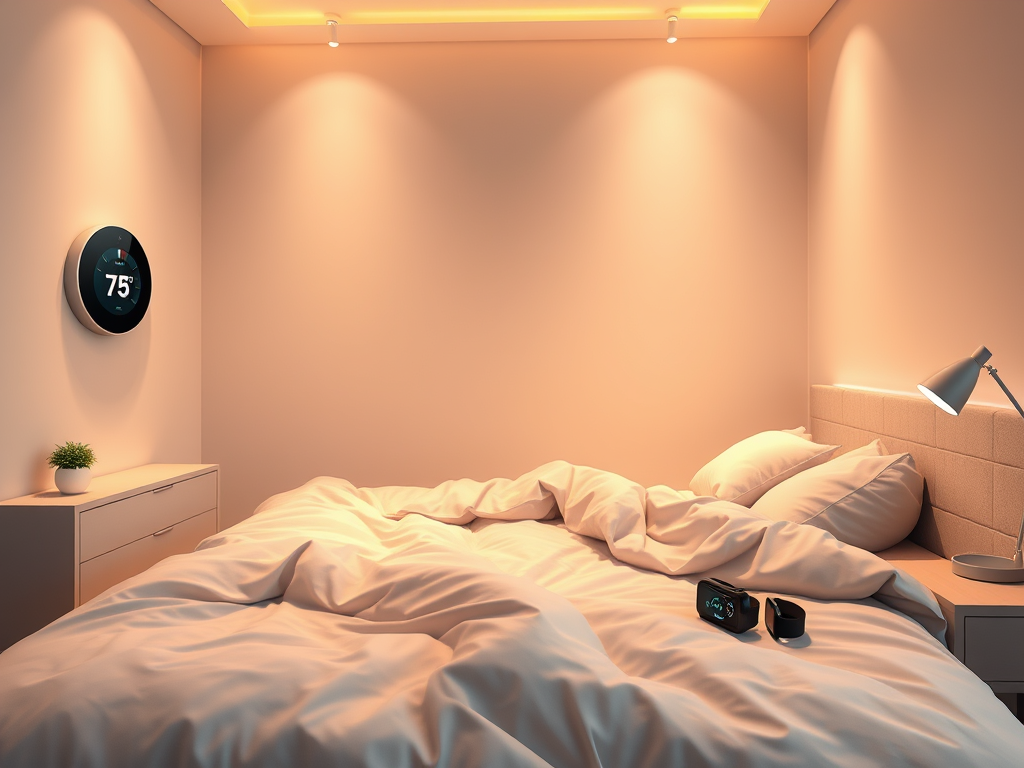
1) “Minimalist bedroom at night, cool-toned light, smart sleep device on table, soft shadows, calm atmosphere”
2) “Person resting peacefully, blue ambient glow from wearable sleep tracker, quiet room, wellness-focused aesthetic
Every night is a negotiation between your mind and your biology.
Maybe tonight, you can give your body the first chance — not the leftovers of the day.
What tiny shift will you try tonight to make tomorrow kinder?
- When Self-Care Broke Us: Reclaiming Wellness
- The Ghost in the Gym: Why Your Routine is a Crime Scene
- The Superpower I’d Choose —And Why It Would Break Me
- How to Slow Down in the City (When It Won’t Slow for You)
- Self Care Tips for City Dwellers Who Are Running Empty



Please Leave a Reply