
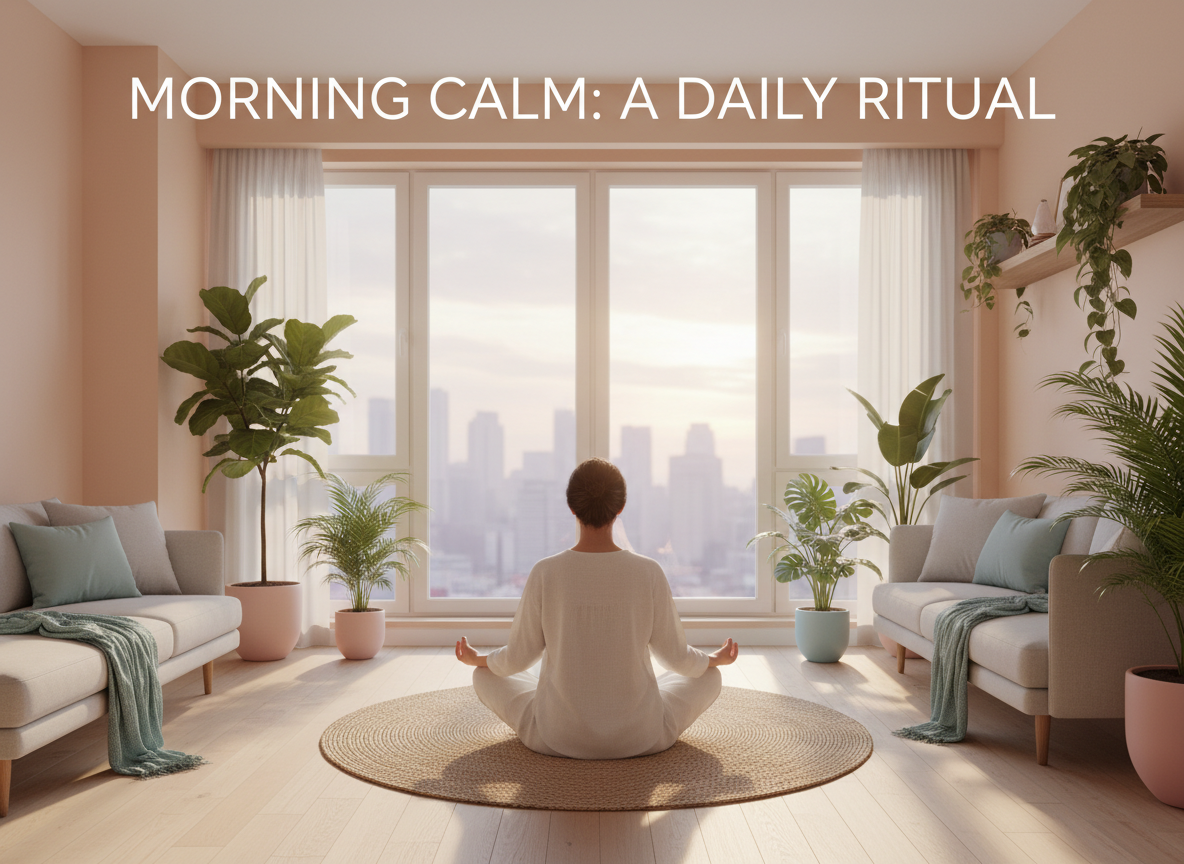

You’re rushing. But you’re already late to your own life.
- Start a no-input walk — phone in pocket, no podcasts, no playlist
- Anchor your morning with one screen-free ritual before the notifications begin
- Eat one meal today without scrolling, without a screen, without catching up
- Take the longer route home — once a week, just once
- Name one thing you noticed today that you’d have walked past last month
There was a lukewarm coffee on a crowded subway, and outside the window — gold. The sky was actually doing something. The city lights hadn’t come on yet; the last few minutes before they would were turning everything amber and quiet and briefly beautiful. I was looking at my phone. I scrolled past it. I didn’t notice the sunset at the time. I noticed it about three stops later, when the window only showed dark tunnel walls, and something in me said: that was it. That was the moment.
I’ve had a “just one minute” call steal an entire evening I didn’t get back. I’ve sat in traffic with nowhere meaningful I was actually going. I’ve watched a notification light blink while a real moment — a real, unrepeatable moment — faded right in front of me. I’ve reheated dinner twice, answered emails that didn’t remember me the next day, and finished whole days with everything done… except feeling anything about it.
A full battery. Strong signal. And still no real connection.
If any of that sentence just landed somewhere — if you read it and felt something small and accurate click into place — then this post is for you. Because the question isn’t really “how do I slow down.” The question is: how did I get this fast without ever choosing to?
Why the City Accelerates You Without Asking
Cities are not neutral environments. They are architecturally designed for urgency. The traffic light counts down. The crossing beeps. The escalator moves even when you stand still, and still you walk on it anyway. The notifications stack. The inbox refills. The delivery window narrows to two hours, then one. Every system around you has been optimised to reduce friction, which is another way of saying: optimised to eliminate pause.
Your nervous system doesn’t just live in this environment. It learns it. It mirrors it. According to Mayo Clinic, chronic stress reshapes how the body and brain respond to ordinary situations — keeping the alarm system switched on even when there is no immediate threat. The city’s pace becomes your default rhythm, not through one bad decision, but through a thousand unremarkable mornings where the phone came before the breath.
Slowing down in this context isn’t a personality choice. It’s a neurological act of reclamation.
“The city didn’t steal your pace. It just offered its own — and you accepted, quietly, over and over, until theirs felt like yours.”
What Slowing Down Actually Means (It’s Not What You Think)

When most people imagine slowing down, they picture something they cannot currently have: a mountain, a sabbatical, a monastery, a simpler life somewhere else. They imagine it requires subtraction — fewer responsibilities, fewer people, fewer obligations. And because they cannot subtract those things right now, they conclude that slowing down is not available to them right now.
That framing is the trap.
Slowing down is not a reduction in the number of things you do. It is a change in the quality of attention you bring to what you’re already doing. It is eating one meal today without a screen. Walking one block without earbuds. Having one conversation where you are not also planning what comes next. It is — and this is the part that costs nothing and changes everything — being present in the moment you are already in, instead of spending it in the one you’re heading toward.
The elevator mirror that shows you a tired version of yourself you haven’t checked in with? That is not a problem to fix on the weekend. That is an invitation available right now, in this moment, to simply look back and ask: how are you, actually?
Related Read
🌱 The Science of Stillness: Why Slowing Down Makes Us Move Forward
Five Ways to Genuinely Slow Down in a City

These are not hacks. They are not productivity optimisations wearing slow clothing. They are small, recoverable experiments — each one asking you to be somewhere rather than go somewhere.
1. The No-Input Walk
Once a day — even if only for ten minutes — walk without audio. No podcast, no playlist, no call. Let the city be your input. The traffic, the voices, the smell of rain on concrete or chai from a cart. You are not meditating. You are simply not outsourcing your experience of being alive to someone else’s voice for ten minutes. This is harder than it sounds, which tells you something important.
2. One Screen-Free Morning Ritual
Before the phone, one thing that is entirely yours. Tea, two minutes on the balcony, a sentence written by hand, the window. The earbuds-in nodding while someone you love quietly stopped trying to be heard — that often begins here, in the morning, when you trained yourself to receive input before you had given yourself a single moment of just being. One ritual. Before the notifications begin. That is the line.
Related Read
📵 Digital Detox Before Bed: Enhance Your Sleep Quality
3. Eat One Meal Without a Screen Today
Not forever. Not a lifestyle change. Today. One meal where the food is the thing you’re doing, not the backdrop to whatever you’re watching. Notice the temperature. Notice when you’re full. Notice that you actually had an opinion about the taste, which you’ve been too distracted to form. Harvard Health research on the relaxation response shows that even brief, intentional pauses activate the parasympathetic system — reducing cortisol, improving digestion, resetting the body’s sense of safety. One meal is not a small act.
4. Take the Long Route Home — Once
Not every day. Once this week. The route that adds seven minutes, passes the trees, has nothing efficient about it. The city lights will come on anyway. The gold above them was always there. You were just always three notifications deep when it happened. Take the long way. Let the sky do what it does while you are watching.
5. Notice One Thing You’d Have Missed Last Month
Before you sleep tonight, name it. One thing. The crack in the pavement shaped like a river delta. The fact that someone smiled at you on the stairs. The sound of your own quiet in the minute before your alarm. Noticing is the practice. Not journaling, not gratitude lists — just the act of registering that a moment occurred and that you were in it. That is the whole practice. That is what slowing down actually is.
🌿 Your City Slow-Down Starter Checklist
- Take a 10-minute walk with no audio input today
- Do one thing before checking your phone tomorrow morning
- Eat one meal without a screen this week
- Take the longer route home at least once this week
- Name one thing tonight you noticed that you’d have walked past last month
- Put your phone face-down during one conversation with someone you love
- Sit with your tea / coffee until it’s actually finished, not just reheated
The Real Cost of Not Slowing Down
The earbuds-in version of ourselves nods along while someone we love quietly stops trying to be heard. The always-connected version answers emails that don’t remember us the next day. We end the day with everything done and nothing felt. We sit in traffic going somewhere, and realise we have no idea where that somewhere actually matters to us.
This is not a dramatic crisis. It is a slow dimming. And the cost is not a burnout you can see coming. It is a gradual exit from your own life while technically still showing up to it.
Related Read
🔕 Burnout Warning Signs That Aren’t on Any List Yet
The letter you would write to your younger self — if you wrote it today — would probably not say “I wish I had been faster.” It would say something else entirely.
Related Read
✉️ Sunday Letter to My Younger Self: What I Know Now
You Don’t Have to Leave to Arrive
The mountain is not required. The sabbatical is not required. The simpler life somewhere else is not required — not yet, not now. What is required is something smaller, and in some ways harder: the decision, made once and then again tomorrow, to be in the city without being consumed by it.
The city will not slow down. It was not designed to. But you were not designed to be a city. You were designed to notice sunsets, even through subway windows, even on ordinary Tuesdays, even when no one is watching and nothing is being optimised and the moment will leave no trace except that you were quietly, unhurriedly, actually there.
“You don’t have to leave to arrive. You just have to stop passing through your own life.” – Remember

Frequently Asked Questions
Why is it so hard to slow down when you live in a city?
Cities are architecturally designed for urgency — traffic lights, push notifications, scheduled everything. Your nervous system mirrors its environment. Slowing down feels like swimming upstream because, neurologically, it is. The city’s pace becomes your default rhythm without you ever choosing it.
What does “slowing down” actually mean for busy urban adults?
It doesn’t mean doing less. It means being present in what you’re already doing — eating without a screen, walking without a destination, choosing one thing at a time. Slowing down is a quality of attention, not a reduction in output.
Can slowing down make you more productive?
Yes. Research from Harvard Health and Mayo Clinic supports that recovery time and mindful pauses reduce cortisol, improve decision-making, and prevent burnout. Rest is not the opposite of performance — it is what makes sustained performance possible.
How do you slow down in a city without feeling left behind?
By redefining what the race is. The city runs on external speed. Your inner life runs on depth. You can hold both — but only if you consciously protect one from swallowing the other. Slowing down is not falling behind. It is choosing which finish line you’re actually running toward.
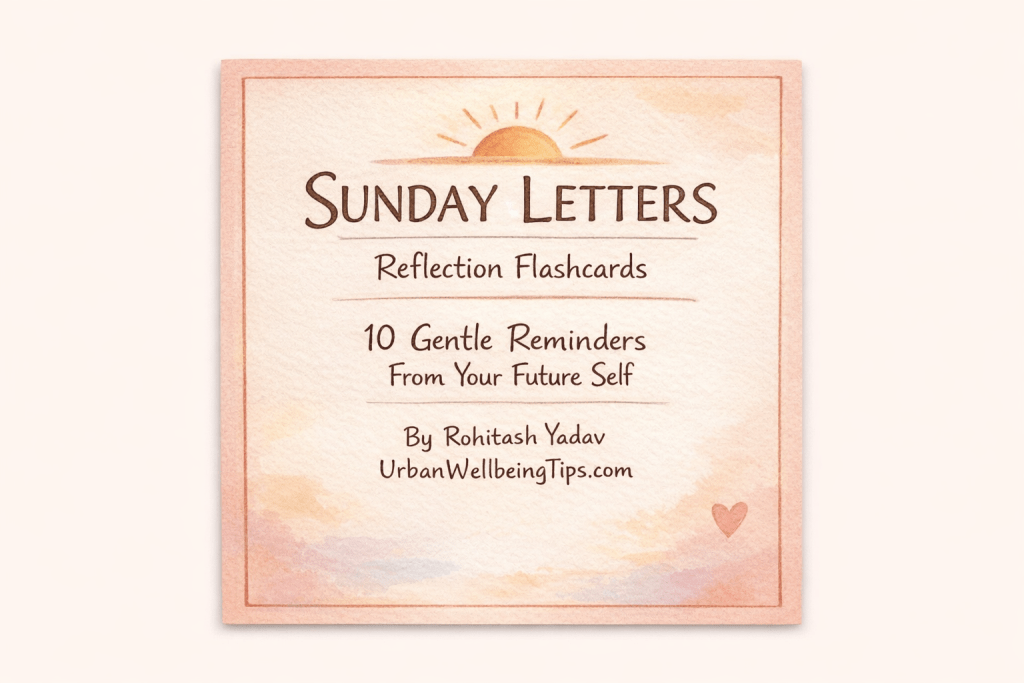
If these words found you at the right moment — there are Sunday Reflection Flashcards in the Wellness Store designed to help you land back in your own life, one quiet prompt at a time.


Please Leave a Reply