
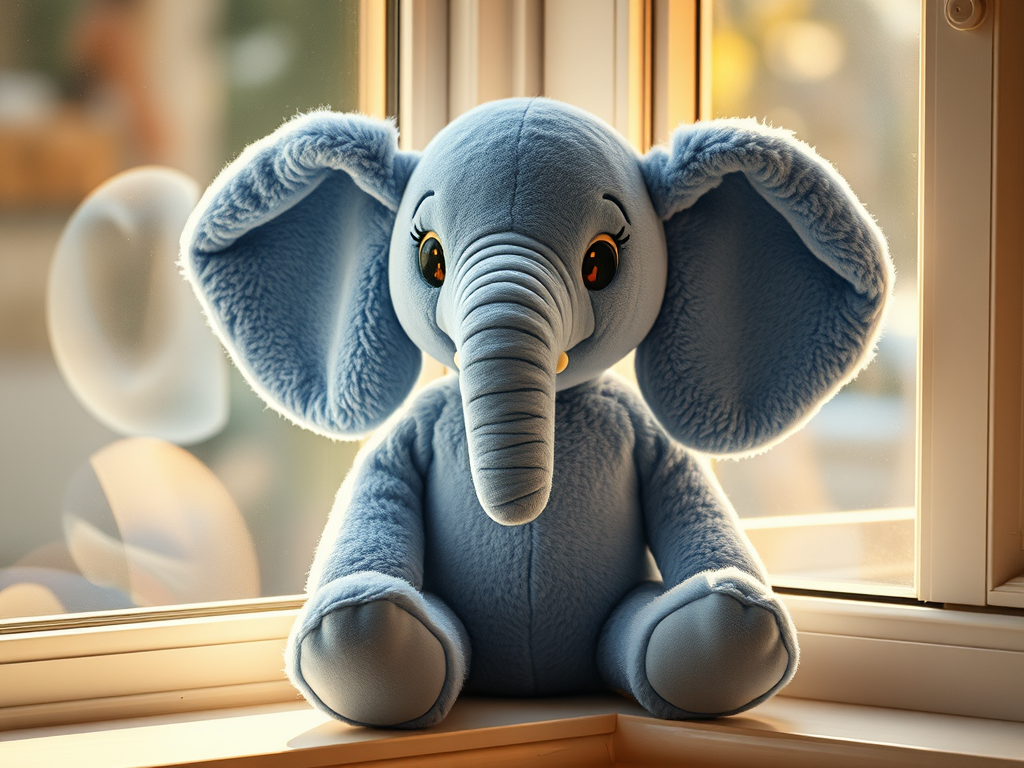

I can still feel the worn cotton under my fingertips. My blue stuffed elephant—Ellie, I called her—had one ear that flopped more than the other, a tail that had been chewed threadbare, and a belly that smelled faintly of lavender from my mother’s linen closet.
She went everywhere with me. Doctor’s appointments. The first day of kindergarten. That terrible week when my parents separated and I slept in my grandmother’s guest room with the wallpaper that made shadows dance at night.
I was eleven when I finally let her go.
Not because I wanted to. Because my older cousin laughed when she saw Ellie tucked under my arm at a family gathering, and shame—hot and immediate—made me stuff her in the back of my closet that very night. Within a month, my mom had donated her to Goodwill during a spring cleaning purge.
I cried for three days straight.
What Nobody Told Me About Attachment
Here’s what I wish someone had explained to my eleven-year-old self: that elephant wasn’t just a toy. She was my first teacher in emotional regulation, my external nervous system, my portable sense of safety in a world that often felt too big and too loud.
Psychologists call these “transitional objects”—items that help us bridge the gap between complete dependence and independence. But they’re so much more than that clinical term suggests. According to attachment theory, the objects we cling to in childhood often mirror the attachment patterns we’ll carry into adulthood.
Think about it. How did you relate to your favorite childhood possession? Did you panic when you couldn’t find it? Did you hide it from others? Could you sleep without it? These weren’t random behaviors—they were your developing nervous system learning how to self-soothe, how to seek comfort, how to manage the anxiety of separation.
The Pattern I Didn’t See Coming
Fast forward twenty years. I found myself in therapy, unpacking why I struggled so much with letting people get close. My therapist asked me to describe the first time I remember feeling abandoned.
I told her about Ellie.
She leaned forward. “And what did you learn from that experience?”
The answer came out before I could stop it: “That the things you love will leave. That needing comfort makes you weak. That you should hide the parts of yourself that need tenderness.”
My childhood elephant had taught me more than how to fall asleep in unfamiliar places. She’d inadvertently shaped my entire approach to emotional wellness and winter self-care—or rather, the abrupt loss of her had.
What Your Childhood Objects Are Really Telling You
If you still have childhood possessions you can’t part with, that’s not necessarily a problem. But it’s worth examining why you’re holding on.
Ask yourself:
- Does this object bring me genuine comfort, or am I keeping it out of guilt or fear? There’s a difference between honoring a memory and being imprisoned by it.
- What need was this object meeting for younger me? Safety? Love? Predictability? And am I meeting that need in healthier ways now as an adult?
- If I lost this object tomorrow, what would that mean about me? Your answer reveals what you’re really holding onto.
Here’s the paradox I’ve learned through my own mindful living practice during seasonal transitions: sometimes holding onto physical objects keeps us from fully processing the emotions attached to them. The object becomes a placeholder—a way to avoid grieving, celebrating, or simply acknowledging what that time in our life meant.
The Practice of Gentle Release
I’m not suggesting you throw away everything from your childhood. Some objects deserve to be kept, cherished, even passed down. But if you’re someone who struggles with emotional attachment to belongings, try this:
Take a photograph. Sometimes we’re not attached to the physical object as much as we’re attached to not forgetting. A photo preserves the memory without requiring physical storage space—or emotional energy.
Write it a goodbye letter. This sounds ridiculous until you try it. Thank the object for what it gave you. Acknowledge what it represented. Give yourself permission to release it with gratitude rather than guilt.
Pass it forward intentionally. If the object still has life in it, donate it to a specific organization where you know it might bring comfort to another child. This transforms loss into legacy.
What Ellie Taught Me After All
I never got my blue elephant back. But a few years ago, I found a similar one at an antique store—same floppy ears, same gentle eyes. I didn’t buy her.
Instead, I stood there in that dusty aisle and felt a wave of tenderness for my younger self. The girl who needed that elephant wasn’t weak. She was doing the best she could with the emotional tools she had. And the woman I’ve become doesn’t need a replacement elephant because I’ve learned to offer myself the comfort I once sought in worn cotton and lavender-scented stuffing.
That’s the real wellness lesson: the objects themselves were never the point. They were training wheels for learning how to hold ourselves through uncertainty, how to create safety in our own bodies, how to carry home with us wherever we go.
Your childhood toy—whatever it was—did its job. It taught you that comfort is possible, that soothing exists, that you’re worthy of tenderness. Now the work is learning to give those things to yourself.
What was your object? And what do you think it was really teaching you?
- Some Things Take Time to Grow
- Dear, Cosmetic Is Not Beauty!
- Zen-Z and the Art of Being Quietly Unexpected
- My Travel Diaries: The Day Is Thursday — When Rain Teaches You to Listen to Your Heart
- Office Diaries: How I Met an Alchemist Hidden Under the Robe
Describe an item you were incredibly attached to as a youth. What became of it?


Please Leave a Reply